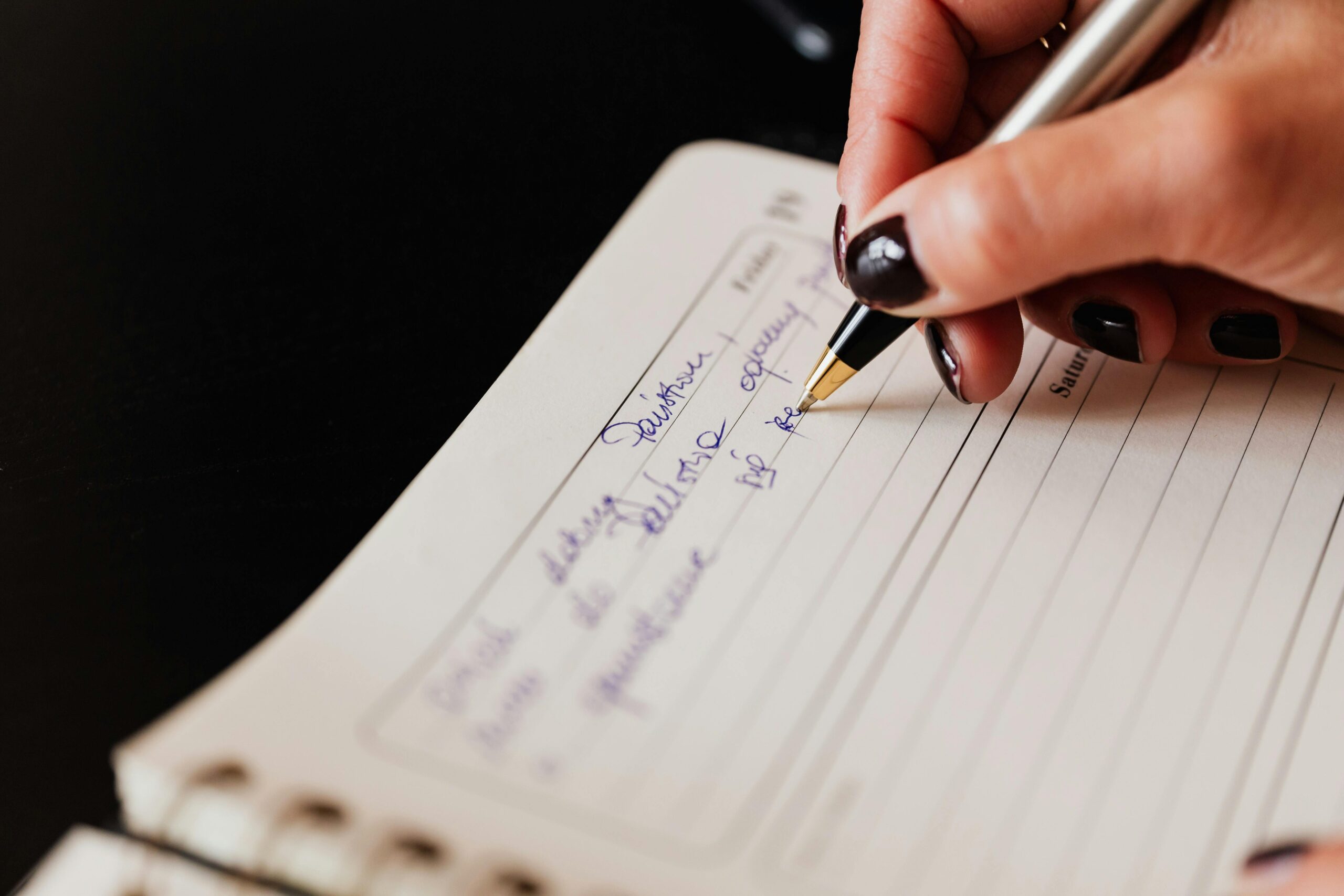
Here’s a counterintuitive fact: the slower you write, the better you learn. Yet most of us have traded the pen for a keyboard and never looked back. If you’re trying to learn something, that trade is costing you.
The Vanishing Ink Phenomenon
We’ve become deeply dependent on our digital devices. Phones, laptops, and tablets handle nearly everything we used to scribble down, from lecture notes to grocery lists. A 2025 survey of Gen Z in India found that 65% of respondents prefer typing to handwriting, and only 20% said they actually enjoy putting pen to paper.
This convenience comes with a cost, and it shows up most clearly when you’re trying to learn.
Handwriting Outperforms Typing
In 2014, psychologists Pam Mueller and Daniel Oppenheimer ran a now-famous experiment. They asked students to take notes on a lecture, some by hand and some on laptops, then quizzed them on the content. Both groups remembered factual details equally, but the handwriters performed noticeably better on conceptual questions.
The reason was speed. Laptop users could transcribe verbatim, so they did. Handwriters couldn’t keep up word-for-word, so they were forced to choose what mattered, compress it, and rephrase it in their own words. That process of synthesizing, prioritizing, and summarizing is the learning. Typing lets you skip it.
Mueller and Oppenheimer had shown what happens when you write by hand. But what was causing it at the neurological level? In 2024, neuroscientists Audrey van der Meer and Ruud van der Weel went looking for the answer. Using high-density EEG on 36 university students, they compared neural activity during handwriting and typing. Handwriting produced significantly more connectivity in the theta and alpha bands, frequencies linked to novelty learning and long-term memory formation. Typing didn’t produce the same patterns. The researchers attribute the difference to the fine motor demands of shaping each unique letter, which engages far more of the brain than the near-uniform tap of a keyboard.
Conclusion
When the goal is to actually learn something, handwriting wins. The friction of the pen does real cognitive work that typing quietly removes.
Keep a notebook handy. Your future self, sitting through the exam or trying to recall what you learned last month, will thank you.